

Property 's cost in Greece
Greece has a fairly lively property market. The economical debt crisis in Greece on the last years it has significantly reduced property prices. In many areas the price decline reaches 80% making Greece excellent destination for foreign buyers.

Until around 1990 there were few estate agents offering services to prospective foreign buyers, although more have appeared as Greece has become more popular.
Old village houses are reasonably priced and in plentiful supply in most areas, although they usually require extensive refurbishment. Many foreign buyers buy a plot of land and build a new house. Note that you can expect to pay a premium for a coastal or island property.
Prices have significantly declined in recent years in most areas and largely affected by Greece debt crisis. The main foreign buyers are the Germans, Frances and Scandinavians, who have been joined by Russian and other Eastern European buyers in recent years.
One of the things that attract many buyers to Greece is the relatively low cost of property compared to many other European countries. Home ownership is one of the highest in Europe, over 80 per cent.
Apart from obvious factors such as size, quality and land area, the most important consideration influencing the price of a house is its location. Property is least expensive in rural areas (on the mainland in Greece), where a farmhouse or village house may cost the same as a studio apartment on a popular island or in a fashionable resort. The quality of property varies considerably in respect to materials, fixtures and fittings, and workmanship. Value for money also varies enormously and you should compare at least five to ten properties to get a good idea of their relative values. Most property is sold freehold.
When property is advertised, the total living area in square meters (written as m2) and the number of bedrooms are usually stated. When comparing prices, compare the cost per square meter of the habitable or built area, excluding patios, terraces and balconies, which should be compared separately.
Note that a garage is rarely provided with old apartments, although there may be a private parking space or a communal off-road parking area. Some apartment blocks have underground garages, and lock-up garages may be sold separately for apartments and townhouses. Villas usually have their own car port or garage. Note that without a garage, parking can be a nightmare, particularly in cities or busy resort towns, developments in summer and even some villages.
Costs vary considerably depending on the location and whether you buy a new or an old property.
Extra costs when buying property in Greece
A variety of fees are payable when you buy a property in Greece, which usually adds between 10 and 15 per cent to the price, which is higher than in many other countries.

Assessed Tax Value
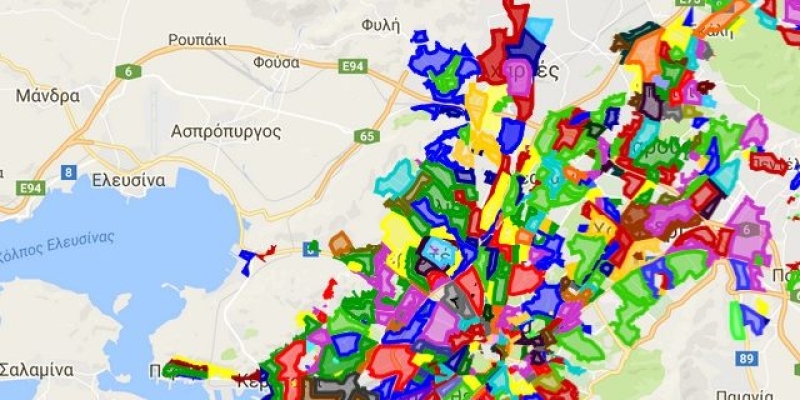
Most fees are based on the "objective tax value" ( antikimeniki acsia) of the property, which is usually lower than the actual price paid. How much lower depends on the location of the property. Property in resort areas or on islands tends to have a higher tax value than that in remote or less popular areas. The "objective tax value" is calculated by the local tax authorities based on government tables using criteria such as the location, size and characteristics of a property. It's this value that's usually declared on the final purchase contract (title deeds).
In some rural areas the value can be negotiated, but in most areas it's fixed. You should ask your lawyer to ascertain the "objective tax value" of the property you plan to buy.
The fees payable when buying a property in Greece may include the following:
- Purchase or transfer tax
- Vat (only for new constructions with building permit after 2006)
- Land registry fees
- Notary's fees
- Lawyer's fees
- Selling agent's fees;
- Utility Fees
Purchase Tax
The main fee is purchase (or transfer) tax, which is based on the "objective tax value" (see objective Tax Value above). Purchase tax is payable by the buyer and today is 3% of the value. Purchase tax must be paid before the final purchase contract is signed and the notary requires proof of payment (the receipt) in order to authorise the sale. The intricacies of purchase tax make it almost mandatory to obtain legal advice before proceeding with a property purchase.
Value Added Tax (VAT)
New constructions with a building licence issued from January 2006 are subject to VAT at the rate of 24%. New constructions with building licences issued before 2006 aren't subject to VAT regardless of when building work is completed. If the seller of the house is an indivindual and not a builder company, properties with builbing licences after 2006 are not subject to VAT with rate of 24% but with purchase tax 3%. Is very important to ask the seller of the house if you must pay 24% taxes or 3% taxes.
Land Registry Fees
Land registry fees are from 0.3 to 0.5 per cent of the "objective tax value" plus a small sum for stamp duties and certificates.
Notary Fees
The fees for the notary, who draws up the final purchase contract and officiates the sale, are usually between 1 and 2 per cent of a property's "oblective tax value". Fees also include small set charges for each sheet and document included in the contract.
Legal Fees
Legal fees for the conveyance involved in a sale are up to 1 per cent of the "objective tax value". The actual fee depends on the value of the property. You and your lawyer should agree the fees in writing beforehand. Engaging a lawyer and paying legal fees is optional, but highly recommended.
Surveyor's Fees
If you employ a surveyor to inspect a building or plot of land, the fee will depend on the type of survey, any special requirements and the value of the property or land. A survey costs from 250 euros.
Selling Agent's Fees
Estate agent's fees are generally 2 per cent of the purchase price and paid by both parties, with the vendor and buyer paying 2% each one of them.
Utility Fees
If you buy a new property maybe you have to pay for electricity, gas and water connections. You should ask the builder or developer to provide the cost of connection to services in writing. In resale properties you will have to pay a small collateral ammout, for the cost of new electricity and water contracts.